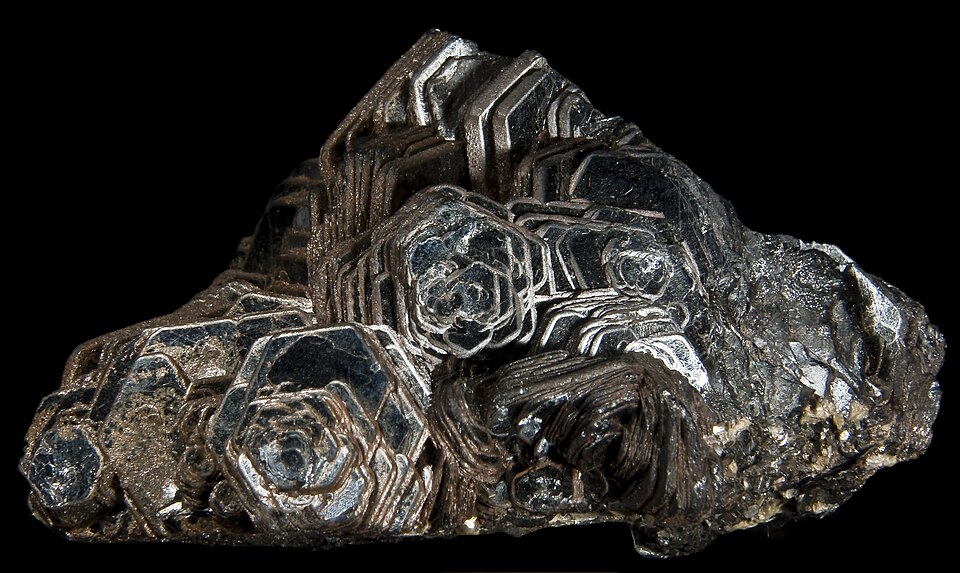
Look at the overlapping plates and bright edges in this iron-rose hematite. Its grey metallic surface is different from the red, earthy form hematite can also take.
Hématite Rose de Fer.jpg · Didier Descouens / CC BY-SA 4.0 (via Wikimedia Commons). Reduced-size preview; no further image changes.Identification clues
Hematite can look metallic and steel-grey, or dull and red. Its forms include plates, rounded masses and earthy material. Mineral references record a red to reddish-brown streak, which is the colour of the powdered mineral and can differ from the surface colour.
Mineral facts and formation
Hematite is an iron oxide found in settings that include sedimentary iron formations and the weathered surfaces of iron-bearing minerals. A documented locality can help explain how an individual piece formed.
Lookalikes and useful comparisons
Compare a metallic-looking surface with the glassy appearance of Obsidian or the polish on Black Onyx. These observations help organise possibilities, but a shiny black finish cannot settle the identity.
Compare Hematite side by side →Care for a display specimen
Protect edges from knocks. Wipe a firm, polished surface lightly with a soft dry cloth. Leave earthy, crumbly or powdery surfaces undisturbed and use the published streak description without testing your specimen.
Look a little closer
Try this observation.
Write separate notes for colour and lustre: for example, “grey” describes colour while “metallic” describes the way light reflects. Keeping those observations separate is useful for every mineral.
Should I do a streak test on my polished stone?
Not for this observation exercise. It can leave damage or powder. Read the published property and compare non-destructive clues first.
Sources and review
Use these references to check the mineral’s properties, compare specimens and follow the care guidance.
- Handbook of Mineralogy: Hematite (PDF) (opens in a new tab)
- University of Minnesota: Hematite (opens in a new tab)
Reviewed by Rock & Crystal Secrets on 24 November 2026. How we review guides · Suggest a correction